
Home › Custom parts › Enclosures
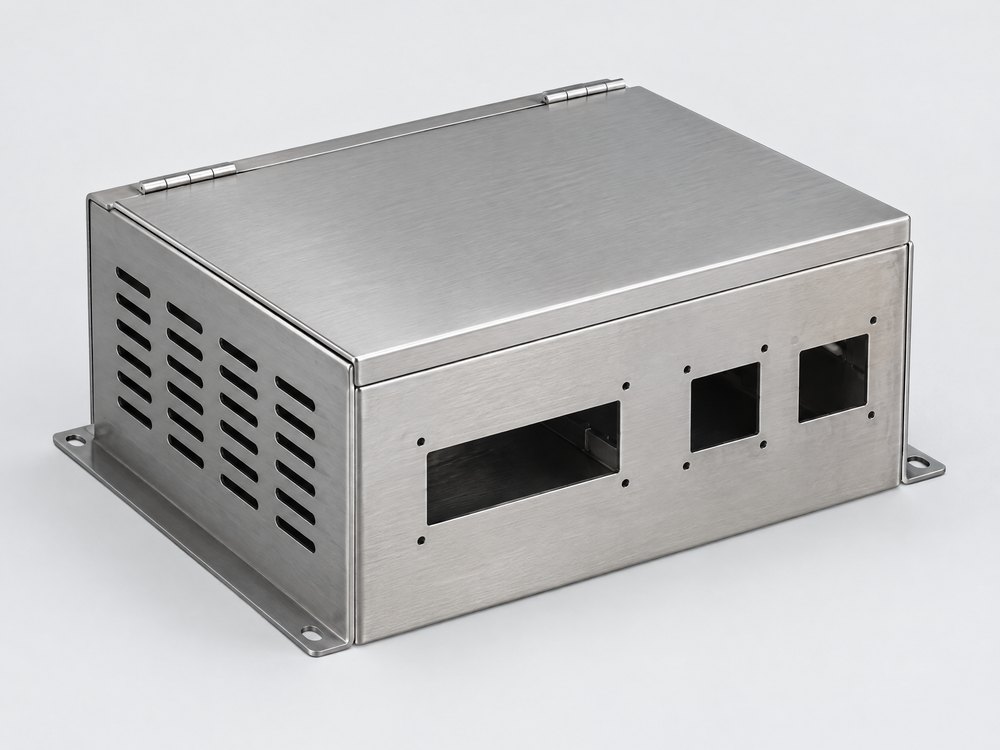
Sheet metal, stainless steel and aluminium enclosures made to your drawing
We source sheet metal enclosures, stainless steel enclosures and aluminium enclosures made to your drawing in series – from device housings to control cabinet enclosures. Here you will find out which process suits your quantity, how to specify IP rating and EMC correctly, and where enclosures fail in practice.
- Sheet metal, aluminium die casting or milled
- IP rating to IEC 60529
- Cut-outs, ventilation, EMC contact surfaces
- Based in Jena since 2011
- Selected partner factories in China
- One contractual partner in Germany
- Pre-shipment inspection included
Enclosures made to drawing: more than a bent sheet
An enclosure is a functional assembly: it has to be sealed, dissipate heat, provide electromagnetic shielding, accommodate connectors and controls – and look good while doing so. These requirements determine the process more than the geometry alone.
Individual bent and laser-cut parts without these enclosure functions can be found on the page Sheet metal parts. This page is about the complete enclosure – from stainless steel sheet metal enclosures with ventilation slots and connector cut-outs to milled aluminium housings for measuring equipment.
Technical specifications: enclosures
| Feature | Specification |
|---|---|
| Materials | Stainless steel 1.4301 / 1.4404, galvanised steel sheet DX51D, DC01 painted, aluminium EN AW-5754 (sheet), EN AW-6061 / 6082 (milled), EN AC-44300 / EN AC-46000 (die casting) |
| Part weight / size | From handheld housings (approx. 50 × 80 mm) to machine guarding; sheet metal enclosures up to approx. 3,000 mm edge length, larger enclosures on request |
| Tolerances | Sheet metal DIN ISO 2768-1 m, flatness of sealing faces approx. 0.2–0.5 mm; milled ±0.05 mm and better; die casting to DIN EN ISO 8062-3 |
| Surface finish / post-processing | Powder coating with masked contact surfaces, anodising, chromate conversion/passivation (conductive), brushed stainless steel, screen printing and laser marking |
| Quantities | No fixed minimum order quantity – which process pays off depends on the enclosure, quantity and tooling costs; because of the mould, die casting usually only pays off from a few thousand pieces per year. Talk to us |
| Inspection | Dimensional and hole pattern inspection, first article inspection report (FAIR / EMPB) on request, coating thickness, leak test to specification, earthing continuity resistance |
| Lead time | First samples in approx. 3 weeks at best, usually longer – up to approx. 10 weeks depending on complexity (e.g. with a die-casting mould); series production approx. 4–8 weeks depending on quantity and complexity (production time only), plus transport (sea freight approx. 30–45 days) |
| Data for your enquiry | 3D model (STEP), drawing, IP rating, EMC requirement, surface finish/RAL, marking, bill of materials for built-in parts, annual volume |
Decision table: sheet metal enclosure, aluminium die casting or milled aluminium housing
The right choice depends mainly on quantity, IP rating and design freedom. The values are common guidelines.
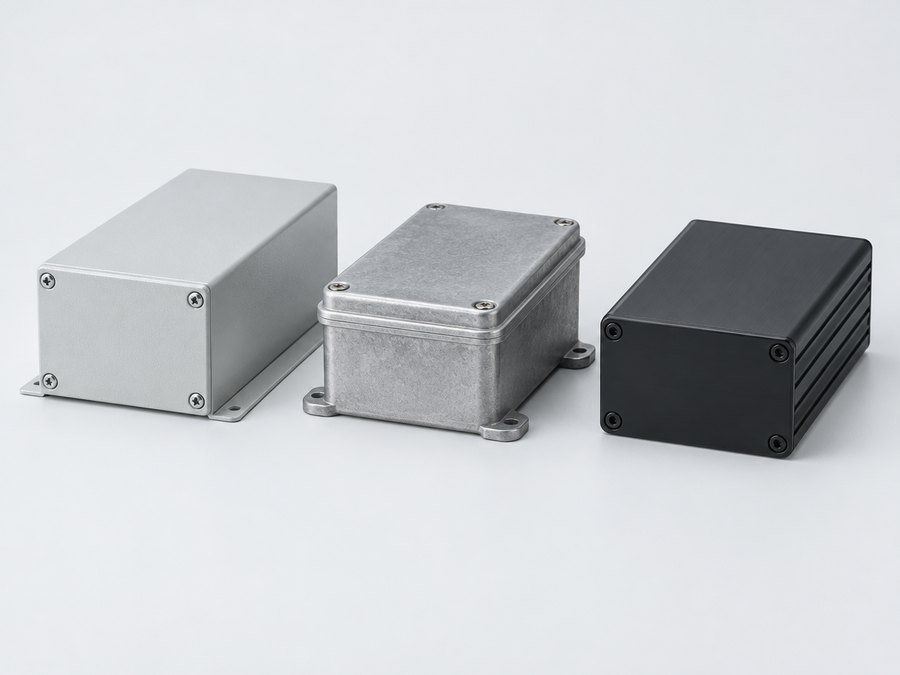
| Criterion | Sheet metal enclosure | Aluminium die casting | Milled from aluminium |
|---|---|---|---|
| Economical quantity | approx. 50–5,000 per year | from approx. 2,000–5,000 per year | approx. 1–500 per year |
| Tooling costs | none to low | high (die-casting mould) | none |
| Realistic IP rating | IP54, IP65/66 with extra effort | IP65–IP67 readily achievable | IP65–IP68 readily achievable |
| Design freedom | Bends and flat surfaces only | Ribs, bosses, cooling fins integrated | Very high, but pockets cost time |
| Wall thickness | 0.8–3 mm | approx. 2–4 mm | free, usually 2–5 mm |
| EMC shielding | good, joints are critical | very good | very good |
| Changes during series production | easy, new program | expensive, mould modification | easy, new CNC program |
| Appearance | Powder coating, brushed stainless steel | Paint/powder, parting line visible | Anodised, very high quality |
IP ratings to IEC 60529 for stainless steel and aluminium enclosures
The IP rating to IEC 60529 (DIN EN 60529) uses the first digit to describe protection against solid foreign objects (0–6) and the second to describe protection against water (0–9). IP54 means dust-protected and splash-proof, IP65 dust-tight and protected against water jets, IP67 temporary immersion (1 m, 30 minutes).
Important for sourcing: the IP rating applies to the finished device with seal, cable glands and lid – not to the empty enclosure. What can be supplied is an enclosure that meets the design prerequisites: flat sealing faces, a continuous seal groove or foamed-in-place gasket, enough screws and no open slots.
Ventilation slots and sealing
Ventilation slots and a high IP rating are mutually exclusive. For IP54, covered louvres or labyrinths are sufficient; from IP65, filter fans, pressure compensation elements or cooling fins are required. This decision should be made before the enquiry, because it determines the process.
Control cabinet enclosures and device housings
Empty enclosures for low-voltage switchgear and controlgear assemblies are described in DIN EN 62208. For impact resistance, there is also the IK code to DIN EN 62262. If your device is tested to these standards, this information belongs in the enquiry.
EMC and design: guidelines for sheet metal enclosures
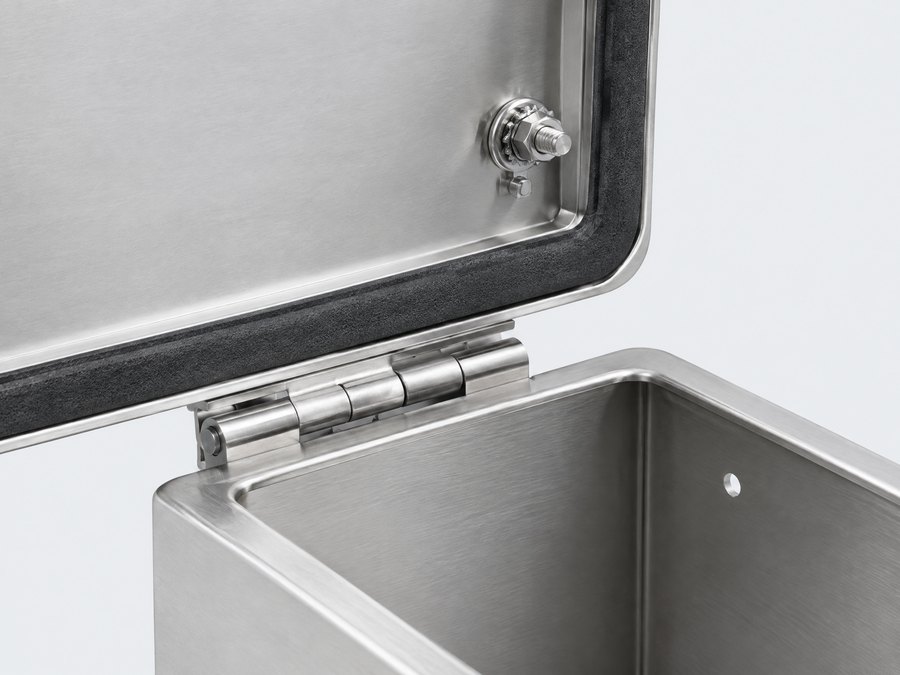
Do not coat contact surfaces
For EMC and protective earth, the lid and base must be connected with metallic conductivity. Mark contact surfaces and earthing studs as “mask” on the drawing, otherwise everything will be powder-coated.
Limit slot length
Every joint acts as a slot antenna. As a guideline, the longest opening should be below λ/20 of the highest interference frequency – at 1 GHz, below approx. 15 mm. Preferably replace long ventilation slots with hole patterns.
Provide a conductive gasket
EMC gaskets (knitted wire mesh, conductive elastomer) need a defined groove and a conductive surface such as chromate conversion coating or bare stainless steel.
Connector cut-outs with tolerance
Dimension cut-outs for D-sub, M12 or circular connectors to the manufacturer’s data sheet and have them measured after coating. 80 µm of powder per side is enough for a connector to no longer fit.
Plan for mounting access
Have press-in studs for mounting plates, DIN rails and earthing inserted before coating. Drilling afterwards destroys the coating and corrosion protection.
Make corners tight
For IP65 and above, weld and grind the corners of sheet metal enclosures instead of just overlapping them. This costs more but saves the sealant, which cracks under temperature changes.
Typical problems with machine guarding and device enclosures
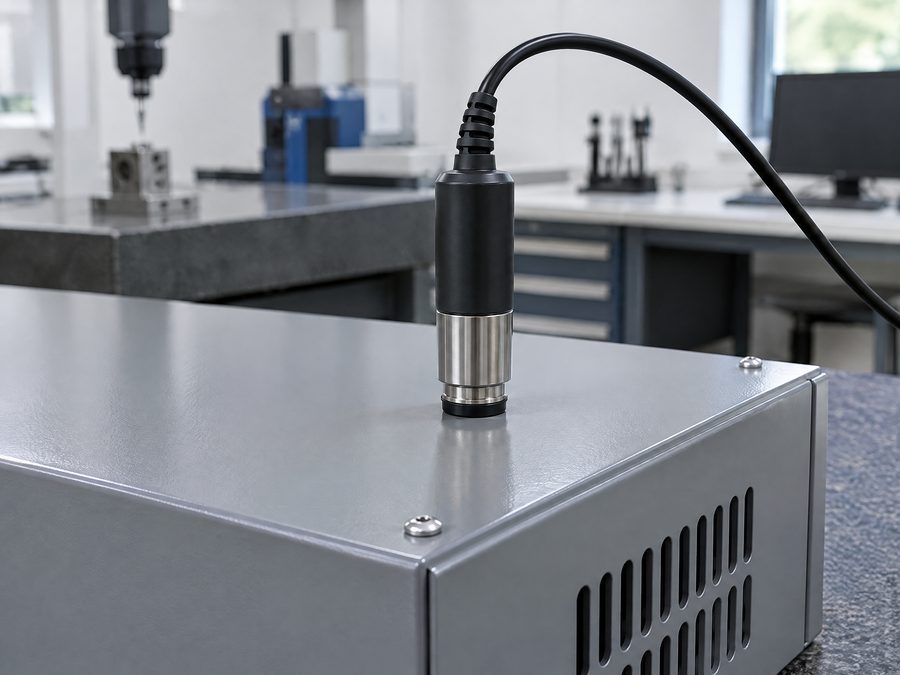
Lid does not fit across all batches
Base and lid from different batches or factories: the tolerances add up. Approve lid and base together and source them from the same production.
Distortion on large side panels
Large, flat surfaces of machine guarding buckle after welding. Beads, folds or bonded stiffeners help more than thicker sheet.
Transport damage to the appearance
Visible surfaces of stainless steel enclosures need protective film until assembly, and individual packaging. The packaging specification is part of the approval.
Marking wrong or hard to read
Approve screen printing and laser marking based on a vector file with colour specification and a limit sample, not on a screenshot.
Reducing the cost of sheet metal and aluminium enclosures
For sheet metal enclosures, welding, grinding the corners and coating are the biggest items. For milled housings it is the machining time – deep pockets and small corner radii cost disproportionately more. In die casting, the tool dominates and only pays for itself over the quantity; details in the guide Tooling costs in China and on the page Aluminium die casting.
- Create enclosure families with identical cross-sections and different lengths
- For small aluminium housings, consider extruded profiles with end caps instead of milling completely
- When milling, choose internal radii ≥ 1/3 of the pocket depth
- IP rating only as high as necessary: IP54 instead of IP66 saves welding work and seals
- Standardise anodising and RAL colours
Process for an enclosure made to drawing
Clarify requirements
IP rating, EMC, built-in parts, appearance and quantity – these determine the process.
Choose process and factory
Sheet metal, machining or die-casting factory with experience in enclosures for the EU market.
Functional samples
Samples with all cut-outs, coating and marking; you check the fit of your components.
First samples and approval
Measurement report, coating thickness, limit samples for appearance and marking; first article inspection report on request. You check the first samples and approve them.
Series with inspection plan
Ongoing inspection of hole pattern, sealing face flatness and surface finish; packaging with protection for visible sides.
Frequently asked questions about enclosures made to drawing
Can you supply an enclosure with IP65 rating?
We supply enclosures that are designed and manufactured for IP65. The IP rating of the finished device with seal and glands is confirmed by testing the end product, which is usually the responsibility of the device manufacturer.
From what quantity is a die-cast enclosure worthwhile?
As a guideline, from a few thousand pieces per year over several years. Below that, sheet metal or milled aluminium housings are almost always cheaper, because no mould has to be paid for.
How does a powder-coated enclosure remain EMC-compliant?
Through masked contact surfaces, uncoated earthing studs and conductive gaskets. These areas must be clearly marked on the drawing.
Are built-in parts such as seals and hinges supplied as well?
That is possible if they are specified in the bill of materials. For branded components, we clarify in advance whether the original or an equivalent part may be fitted.
Stainless steel enclosure or powder-coated steel?
Stainless steel 1.4301 pays off where cleaning, moisture or food applications are involved. In a dry indoor environment, powder-coated or galvanised steel sheet is usually considerably cheaper.
Can small aluminium housings be anodised and marked?
Yes, milled or profile-based aluminium housings are usually anodised and marked by laser or screen printing. Specify the shade and coating thickness and approve a limit sample.
Related part types
Enquiry: Enclosures made to your drawing
Upload your drawing and 3D model, tell us the quantity and your deadline – we check feasibility and get back to you with questions or a quotation.
- Technical clarification before the request for quotation
- Quotations from audited partner factories
- One contact person in Germany
- Non-disclosure agreement (NDA) in advance on request
Prefer to call? 03641 9286337 · Mon–Fri 8 am–6 pm (CET)