Home › Custom parts › Welded & Mechanical Assemblies
Welded Assemblies and Assembly Production from China – Ready to Install, Made to Your Drawing
We source welded assemblies and pre-assembled machine assemblies in series from China – from the welded frame to the tested mechanical assembly with bought-in parts. For purchasing and engineering, this means fewer individual orders, less assembly work in your own plant and one contact in Germany for the complete bill of materials.
- Welded, machined, coated, assembled
- BOM clarified, including bought-in parts
- Functional test before shipment
- Based in Jena since 2011
- Selected partner factories in China
- One contractual partner in Germany
- Pre-shipment inspection included
When assembly production in China pays off
Sourcing an assembly from the Far East pays off above all when the share of labour is high: many welds, several machining steps, coating and assembly. The more work steps are handled by one supplier, the lower the transport, handling and inspection costs between the stages.
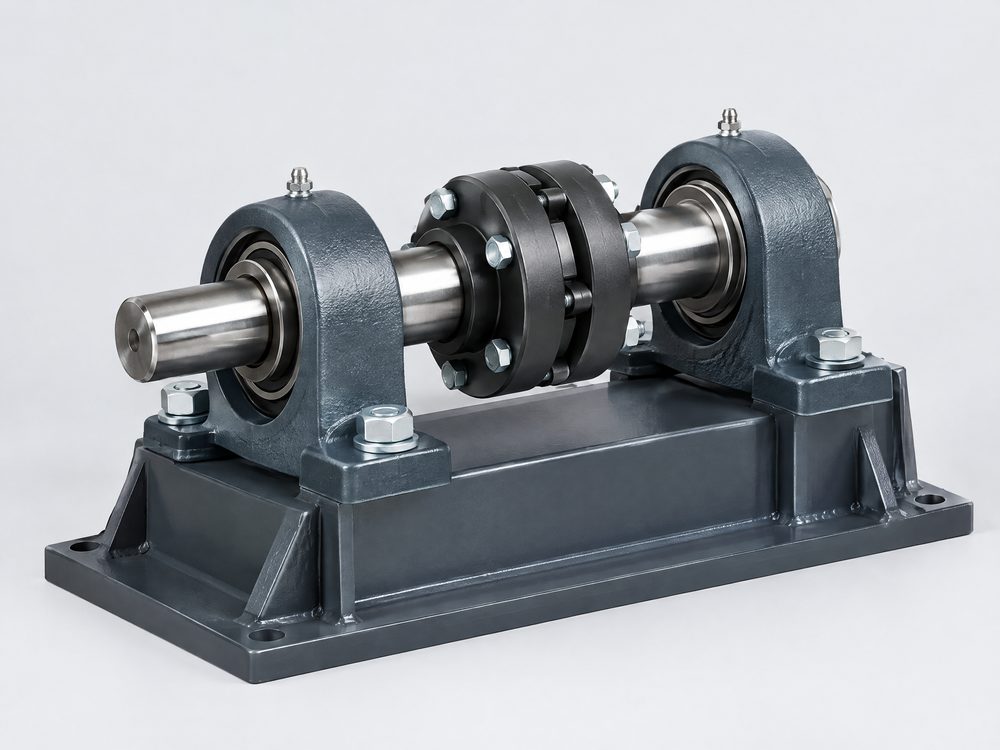
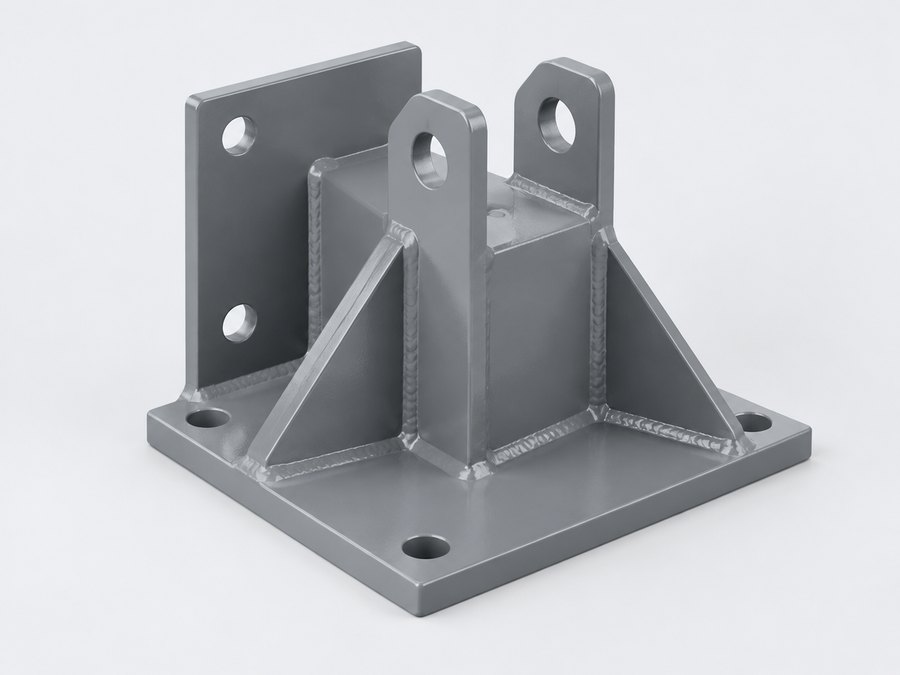
Typical welded assemblies are base frames, brackets, protective covers, lever arms, axle supports and racks. Typical mechanical assemblies are bearing blocks with pressed-in bearings, gearbox supports, valve and cylinder assemblies or equipment slide-in units with sheet metal, cables and standard parts.
There are limits, too: assemblies with frequent design changes, very small batch sizes or parts that have to be combined with other components at the customer’s site anyway are usually better made in Europe – for example through our partner in the Czech Republic.
Technical specifications: welded and mechanical assemblies
| Feature | Specification |
|---|---|
| Materials | Structural steel S235JR, S355J2, fine-grain structural steel S690QL, stainless steel 1.4301 / 1.4404, aluminium EN AW-5083 / EN AW-6082 |
| Part weight / size | From small brackets under 1 kg to large frames with edge lengths of several metres – no fixed upper limit; large and heavy assemblies on request |
| Tolerances | Welded parts typically ISO 13920 class B/F or C/G; functional dimensions machined after welding (tolerances as for CNC parts) |
| Surface finish / secondary operations | Blasting, primer, powder coating or wet paint, hot-dip galvanising, cathodic dip coating (KTL); pickling and passivation for stainless steel; stress-relief annealing where there is a risk of distortion |
| Quantities | No fixed minimum order quantity – whether sourcing makes sense depends on the assembly, the quantity and the fixture costs; talk to us. Series and recurring call-offs are typical |
| Inspections | Visual inspection of welds (ISO 17637), MT/PT/UT if required, dimensional report, coating thickness, torque and functional testing, first article inspection report (FAIR / EMPB) |
| Lead time | First samples in approx. 3 weeks at best, usually longer – up to approx. 10 weeks depending on complexity; series production approx. 4–8 weeks depending on quantity and complexity (production time only), plus transport (sea freight approx. 30–45 days) |
| Data for your enquiry | 3D model (STEP) and 2D drawing with welding symbols to ISO 2553, bill of materials with item numbers, coating specification, inspection requirements, annual volume and batch size |
Welding standards and quality levels for welded assemblies
The requirements you place on the manufacturer should match the part. Excessive specifications drive up the price; missing specifications lead to disputes at acceptance.
| Standard | What it covers | When to require it? |
|---|---|---|
| ISO 3834-2 / -3 / -4 | Quality requirements for the welding company: comprehensive, standard, elementary | Part 3 for most machine frames; Part 2 for highly stressed or safety-relevant components |
| ISO 15614-1 | Welding procedure qualification (WPQR) – proves that the procedure, material and parameters deliver the required result | For dynamically loaded welds, thick plates, higher-strength steels |
| ISO 15609-1 | Welding procedure specification (WPS) for the specific weld | Always useful – also as evidence in the event of complaints |
| ISO 9606-1 | Welder qualification testing | Together with ISO 3834 and WPS |
| ISO 5817 | Quality levels B, C, D for imperfections (porosity, undercuts, excess weld metal) | State it on the drawing – usually C, B for visible or dynamically loaded welds |
| EN 1090 | Execution of steel and aluminium structures, CE marking for construction products | Only for load-bearing components for buildings and structures – not for normal machine frames |
Design guidelines for welded assemblies
Many cost and quality problems originate in the drawing, not in the workshop.
Plan for distortion
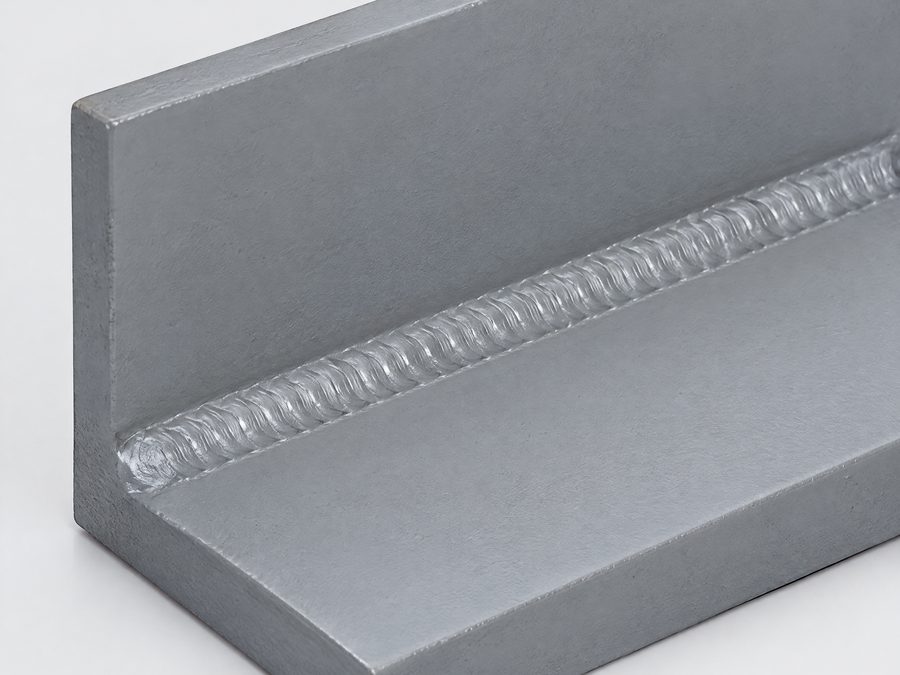
Long welds on thin sheets pull the part out of shape. Give functional surfaces, locating holes and bearing seats a machining allowance of approx. 2–3 mm and finish-machine them only after welding.
Dimension welds completely
Use welding symbols to ISO 2553 with throat thickness (a), weld length and weld type. A blanket “welded all round” leads to oversized welds or disputes.
Check accessibility
The torch needs space: corners under approx. 60° and deep boxes can hardly be welded cleanly. Hollow sections need vent holes if they are galvanised.
Define the general tolerance
State ISO 13920 with the class (e.g. “ISO 13920-BF”). Without this, every factory applies its own standards.
Interface with machining
Mark which dimensions apply in the as-welded condition and which after machining. Choose the datum system (A-B-C) so that it can be picked up reliably on the welded part.
Consider the coating
Mark masked areas (threads, fits, earth connection) on the drawing. With powder coating, allow for a coating thickness of approx. 60–120 µm at fits.
Mechanical assemblies: BOM and bought-in parts – who sources what?
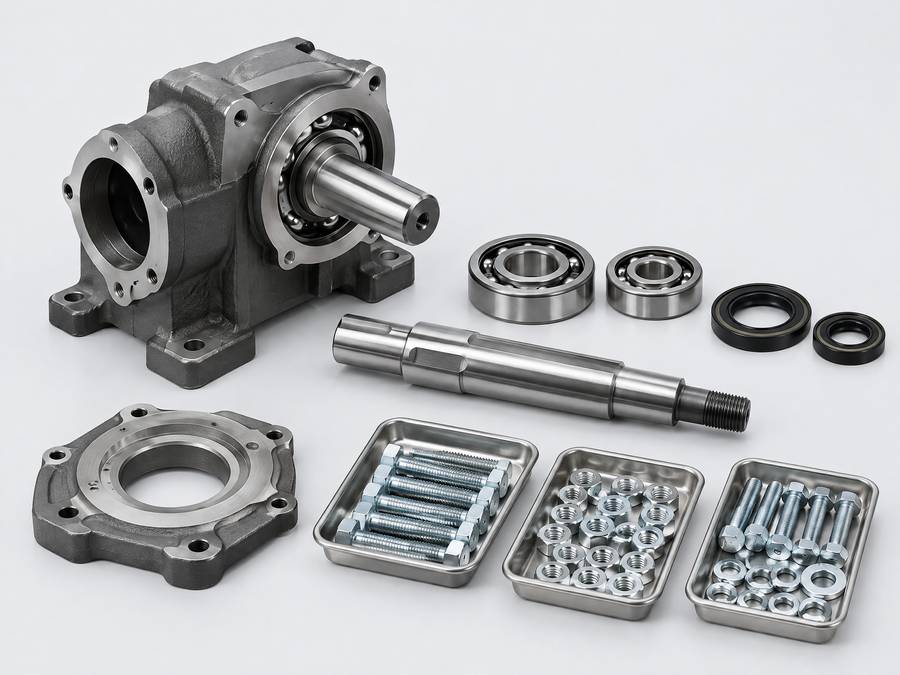
For pre-assembled units, the bill of materials is the most important part of the enquiry. For each item it must be clear whether it is made to your drawing, bought in by the factory as a standard part or branded product or supplied by you.
This is where most misunderstandings arise: if the BOM says “deep groove ball bearing 6205-2RS”, a Chinese factory will by default use a local bearing. If you need a specific brand or bearing clearance (C3), it has to be stated explicitly.
Typical split
- Standard parts (screws, nuts, pins, retaining rings to ISO/DIN): bought in locally; specify property class and surface finish.
- Bearings, seals, guides: local quality or an approved brand – be sure to specify, with proof of origin for branded goods.
- Drives, motors, sensors, pneumatics: often supplied by the customer or purchased as a defined brand through authorised distributors; otherwise questions of CE marking, spare parts and warranty arise.
- Cables and connectors: specify as a separate item, see cable assembly.
Functional testing and documentation
Define what is checked before shipment: smooth running, play, tightening torques (with record), leak-tightness, electrical function. The more specific the test instruction, the more comparable the results from delivery to delivery. Where required, a first article inspection report and a series inspection plan are part of it.
Typical defects in welded assemblies – and how to avoid them
Porosity and lack of fusion
Often caused by moisture, mill scale or the wrong shielding gas. Countermeasure: specify the quality level to ISO 5817, request the WPS, and include MT or UT in the inspection plan for critical welds.
Distortion outside tolerance
Can be controlled through tacking sequence, clamping fixture and, if necessary, stress-relief annealing. Check the dimensional report of the first samples before series release.
Weld spatter and slag under the paint
Leads to paint flaking and rust. Put the requirement “free of spatter, blasted to ISO 8501-1 Sa 2½ before coating” on the drawing.
Wrong or unchecked bought-in parts
Unapproved bearings or screws of the wrong property class. Countermeasure: BOM with specifications; request incoming goods records from the factory.
Transport damage
Paint damage, bent add-on parts, corrosion in the container. Countermeasure: packaging specification, see below.
Cost drivers and packaging for assemblies
The price of a welded assembly depends less on the weight of steel than on the labour time: number of individual parts, weld length and throat thickness, straightening effort, machining after welding and coating. A frame made of 40 blanks with many short welds is more expensive than a bent sheet metal part with few welds – a redesign to sheet metal parts with tab-and-slot joints often pays off.
Other price factors: fixture costs for series, scope of inspection, volume during transport. Bulky frames ship a lot of air. Assemblies that can be shipped disassembled or nested inside each other noticeably reduce freight costs.
- Export packaging: wooden crates or wooden pallets to ISPM 15 (heat-treated, marked)
- Corrosion protection for bare surfaces: VCI film, anti-corrosion oil, desiccant in the container
- Securing of moving parts, protection of painted and sealing surfaces
- Labelling on each package: part number, quantity, batch – important for traceability and goods receipt
Process: from the bill of materials to the series assembly
Clarify drawing and BOM
We check welding details, tolerances and every BOM item for manufacture, purchase or customer supply.
Factory selection and quotation
Selection of a factory that covers welding, machining and assembly or coordinates them properly; quotation with fixture costs and unit costs.
Samples and first article inspection
Sample assembly with dimensional report, coating thickness and functional test, with FAIR on request – you inspect and approve the first sample.
Process approval and series production
After your approval: series production to your specifications with a series inspection plan, packaging approval, schedule tracking and escalation in the event of deviations.
A good fit / less suitable
A good fit if …
- Steel frames, brackets and racks with a high share of welding and machining
- Mechanical assemblies with a clear BOM and a stable design
- Series demand with plannable call-offs
Less suitable if …
- One-off parts or prototypes without series prospects
- Assemblies with ongoing design changes
- Load-bearing components for buildings and structures if no factory with EN 1090 certification can be found
Frequently asked questions about welded and mechanical assemblies
Do I need a welding procedure qualification to ISO 15614 for my welded assembly?
Not always. For simple frames with low static loads, a WPS, qualified welders and a quality level to ISO 5817 are usually sufficient. For dynamically loaded welds, higher-strength steels or safety components, you should require a WPQR to ISO 15614-1.
Which part of ISO 3834 should I require?
For most machine components, ISO 3834-3 is sufficient. ISO 3834-2 makes sense if failures could endanger people or cause high consequential costs. It is important that the certification matches the material and process of your assembly. We check case by case, against your requirements, whether a factory has the required evidence.
Can Chinese factories fit branded bearings or drives?
Yes, if this is specified in the BOM. Branded goods should be purchased through authorised distributors and documented. Alternatively, you supply critical bought-in parts yourself – in that case, logistics and customs for these parts have to be planned in.
How is distortion controlled in large frames?
Through the welding sequence, stable fixtures, stress-relief annealing if necessary and by machining the functional surfaces after welding. The key is that the drawing distinguishes between the as-welded and the machined condition.
What is checked in the functional test of a mechanical assembly?
You decide: for example smooth running, play, tightening torques, leak-tightness or electrical function. We recommend a short written test instruction with limit values so that the results are comparable.
Does it make sense to separate individual parts and assembly?
Rarely. If individual parts are made in China and assembled in Germany, packaging, freight and inspection are incurred twice. You should only source them separately if assembly requires special know-how or your own test equipment.
Related part types
Enquiry: Welded & Mechanical Assemblies made to your drawing
Upload your drawing and 3D model, tell us the quantity and your deadline – we check feasibility and get back to you with questions or a quotation.
- Technical clarification before the request for quotation
- Quotations from audited partner factories
- One contact person in Germany
- Non-disclosure agreement (NDA) in advance on request
Prefer to call? 03641 9286337 · Mon–Fri 8 am–6 pm (CET)