
Home › Guides › Incoterms for imports from China
Incoterms 2020 for imports from China: EXW, FOB, CIF or DDP?
For sea freight imports from China, FOB (or FCA for containers) is the usual choice if you have your own freight forwarder: you control freight and costs, and the supplier handles export clearance. Without your own logistics, DAP or DDP from a supplier based in the EU is the most convenient. EXW is almost always unfavourable for imports from China, and with CIF you should be aware that the risk passes to you as early as the port of shipment.
- Table: costs and risk
- Recommendations for each situation
- Avoiding typical mistakes
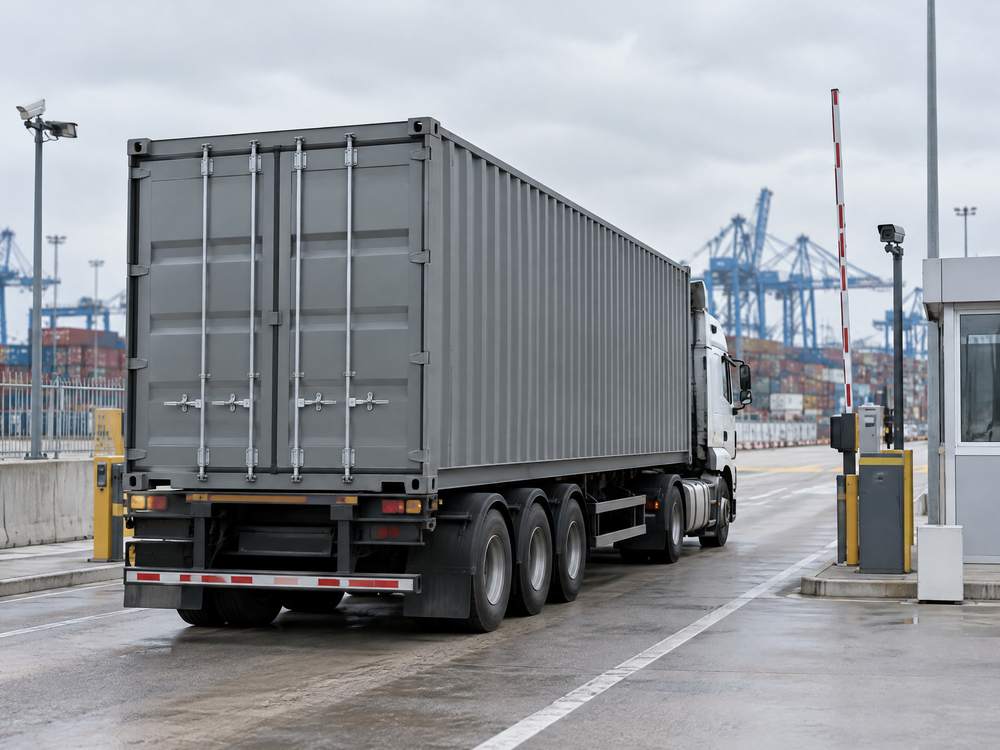
What Incoterms govern in imports from China – and what they don’t
Incoterms for imports from China define who bears which transport costs, where the risk of loss and damage passes, and who handles export and import formalities. The version in force (as of October 2026) is Incoterms® 2020 of the International Chamber of Commerce (ICC).
They do not govern transfer of ownership, payment terms, statutory warranty or the applicable law. So “FOB Shanghai” says nothing about when you pay or when the goods become yours – that belongs in the purchase contract.
Transfer of costs and risk at a glance
Simplified overview of the most common clauses for deliveries from China to Germany:
| Clause | Transfer of risk | Main carriage paid by | Export clearance China | Import, customs duty, import VAT | Cargo insurance |
|---|---|---|---|---|---|
| EXW (Ex Works) | Supplier’s factory, not loaded | Buyer | Buyer | Buyer | Not regulated, advisable for buyer |
| FCA (Free Carrier) | Handover to your carrier, e.g. container terminal | Buyer | Seller | Buyer | Not regulated |
| FOB (Free on Board) | On board the vessel at the port of shipment | Buyer | Seller | Buyer | Not regulated |
| CFR (Cost and Freight) | On board at the port of shipment | Seller | Seller | Buyer | Not regulated |
| CIF (Cost, Insurance and Freight) | On board at the port of shipment | Seller | Seller | Buyer | Seller, minimum cover ICC (C) |
| CIP (Carriage and Insurance Paid To) | Handover to the first carrier | Seller | Seller | Buyer | Seller, cover ICC (A) |
| DAP (Delivered at Place) | At the place of destination, ready for unloading | Seller | Seller | Buyer | Seller, in its own interest |
| DDP (Delivered Duty Paid) | At the place of destination, ready for unloading | Seller | Seller | Seller | Seller, in its own interest |
The four most important clauses in detail
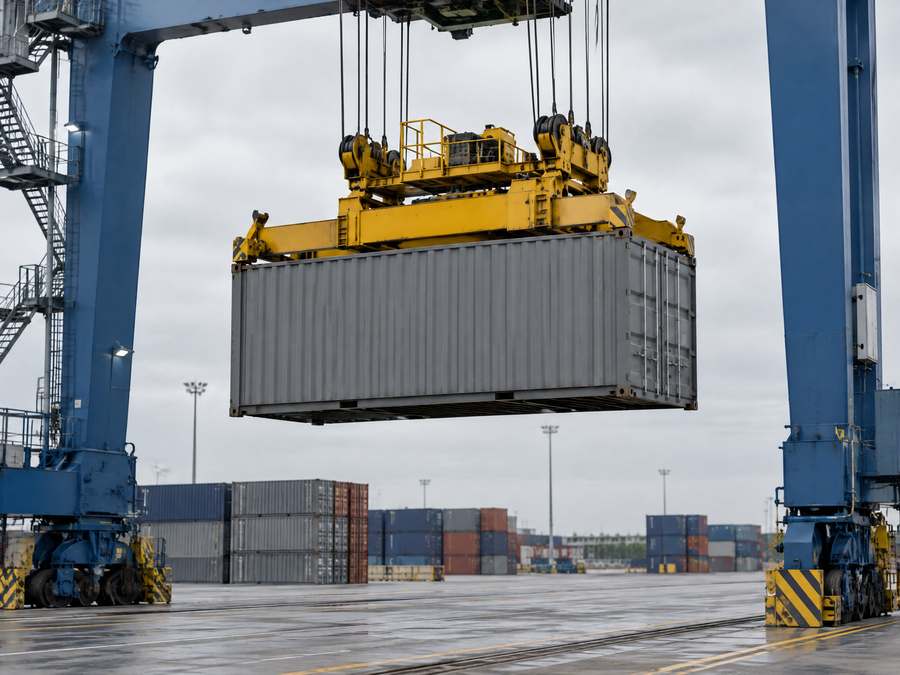
EXW – cheap on paper, difficult in China
With EXW, you have to collect the goods from the factory and also declare the export from China. In practice, this requires a company or an appointed agent in China. What usually happens is that the supplier handles export clearance after all – but without a contractual obligation and with unclear responsibility. Loading is also your responsibility under EXW; any damage during loading is at your expense.
FOB and FCA – the standard solution with your own forwarder
FOB is the most widely used clause in business with China: the supplier brings the goods to the port, handles export and loads them; you book sea freight and insurance through your freight forwarder. The advantage: you know the freight costs, choose the shipping line and transit time, and stay in control.
Strictly speaking, FOB is intended for sea freight of bulk cargo. With containers, the supplier hands over the goods at the terminal, days before loading – the ICC recommends FCA for this. In everyday practice, FOB is still usually agreed; what matters is that both sides know what is meant.
CIF – the supplier pays the freight, you bear the risk
With CIF, the supplier organises freight and insurance to the port of destination. However, the risk passes to you as soon as the goods are loaded in China. The prescribed minimum insurance (ICC Clause C, 110 % of the goods value) only covers major events such as stranding or fire, not typical transport damage such as moisture or breakage. In addition, the supplier chooses the shipping line – often the cheapest, not the fastest – and high charges that you have to bear may arise at the port of destination.
DDP – convenient, but with tax pitfalls
With DDP, the seller delivers customs-cleared to your plant and pays customs duty and import VAT. For you, this is the simplest option – provided the seller can do it in a legally compliant way. A supplier not based in the EU needs an EORI number and, as a rule, German VAT registration. If this is not the case, the import is often declared in the buyer’s name – and then you are the importer after all, without knowing it from the contract. Background information in the article Customs duty and import VAT.
Which clause suits you?
A good fit if …
- FOB/FCA: you have a freight forwarder with China experience and want to control freight costs yourself.
- CIF/CFR: individual shipments without your own freight contracts – only with your own additional insurance.
- DAP: the supplier organises transport to your plant, and you clear customs yourself through your forwarder.
- DDP: you want a fixed price delivered to your plant and a German invoice – sensible with a contractual partner based in Germany.
Less suitable if …
- EXW without your own organisation in China.
- CIF with minimum insurance for sensitive or high-value parts.
- DDP with a supplier without an EORI number and German tax registration.
- FOB or CIF for air freight or rail freight – FCA, CPT or CIP are intended for these.
Mode of transport and suitable clause
The mode of transport helps determine which clause makes sense. Transit times are guide values from port or terminal to Germany, excluding pre- and on-carriage (as of 2026, varying by route and the situation in the Red Sea).
| Mode of transport | Transit time (guide value) | Suitable clauses | Typical for |
|---|---|---|---|
| Container sea freight (FCL/LCL) | approx. 30–45 days | FCA, FOB, CFR, CIF, DAP, DDP | Series deliveries, heavy parts |
| Rail freight China–Europe | approx. 18–25 days | FCA, CPT, CIP, DAP, DDP | Urgent partial quantities, medium values |
| Air freight | approx. 3–7 days | FCA, CPT, CIP, DAP, DDP | Samples, shortages, light high-value parts |
| Courier/express | approx. 3–6 days | Usually DAP or DDP | First samples, documents |
Typical Incoterms mistakes in China sourcing
Place missing or wrong
“FOB” on its own is incomplete. Correct is, for example, “FOB Ningbo Incoterms® 2020”. “FOB Hamburg” is factually wrong for imports from China – FOB always refers to the port of shipment.
Version not stated
Without “Incoterms® 2020”, it remains open whether the 2010 version is meant. The differences are small, but relevant, for example, for insurance under CIP.
Insurance underestimated
Under FOB and FCA, the goods are not automatically insured from the port or terminal onwards. An open cargo insurance policy usually costs only a fraction of a percent of the goods value.
Destination port charges overlooked
With CIF/CFR, you pay terminal and unloading charges at the port of destination. Some sellers calculate sea freight tightly and leave the rest to be incurred by the buyer.
Incoterm confused with payment terms
A letter of credit or “30 % deposit, 70 % against copy of the bill of lading” is a payment term, not an Incoterm – both must be agreed separately.
Customs value derived incorrectly
Regardless of the Incoterm, the customs value in the EU is on a CIF basis. With EXW or FOB, you must add pre-carriage, freight and insurance up to the EU border.
Delivery terms at TOP Asia Technik GmbH
The standard at TOP Asia Technik GmbH is delivery to your door, duty paid (DDP): transport is included in the price, we clear customs, pay customs duty and import VAT, and you receive a German invoice in euros with 19 % VAT. Your contractual partner is a German GmbH. On request, we also deliver EXW or under other Incoterms – then no freight buffer needs to be priced in, which can be cheaper for you. We agree the delivery terms with you.
On request, safety stocks, call-off orders or a consignment or interim warehouse, e.g. at the freight forwarder, are also possible; the customer bears the storage costs. More on the process under Sourcing from China; you can get a cost calculation for your part via the enquiry form. For heavy parts such as castings or machine frames, comparing the freight options is particularly worthwhile.
Frequently asked questions about Incoterms for imports from China
Is FOB or CIF cheaper?
For regular shipments, usually FOB, because you achieve better freight rates and transparency on ancillary costs with your own forwarder. CIF can be convenient for individual shipments, but hides costs at the port of destination.
When does the risk pass under FOB?
When the goods are on board the vessel at the named port of shipment. The seller bears any damage during pre-carriage to the port and during loading.
Are there already Incoterms 2030?
As of October 2026, Incoterms® 2020 is the version in force. The ICC revises the rules roughly every ten years; always agree the version explicitly.
Which Incoterm applies to rail freight from China?
FCA, CPT, CIP, DAP or DDP are suitable for rail and air freight. Under the rules, FOB and CIF are intended only for sea and inland waterway transport.
Send your drawing – get a quotation
Upload your drawing and 3D model, tell us the quantity and your deadline – we check feasibility and get back to you with questions or a quotation.
- Technical clarification before the request for quotation
- Quotations from audited partner factories
- One contact person in Germany
- Non-disclosure agreement (NDA) in advance on request
Prefer to call? 03641 9286337 · Mon–Fri 8 am–6 pm (CET)