
Home › Custom parts › Sheet metal parts
Sheet metal parts made to drawing – laser-cut, bent and welded parts in series
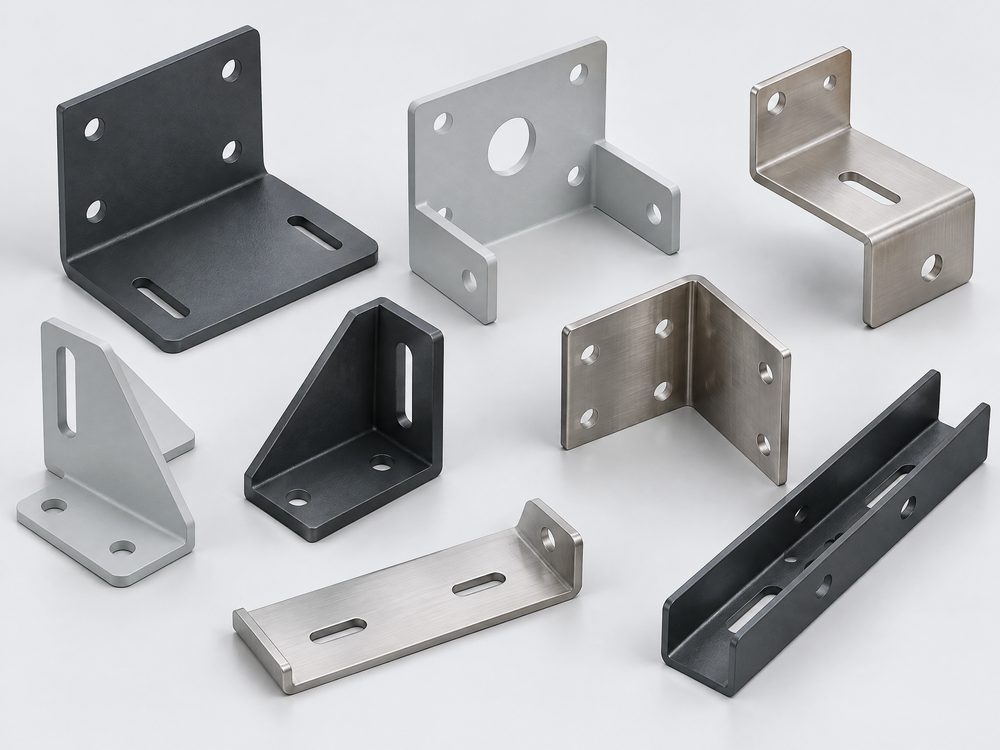
We source sheet metal parts made to your drawing in series – laser-cut, bent, welded and coated, mainly from vetted factories in China. For buyers and design engineers in machine building, plant engineering and equipment manufacturing who have a recurring need for brackets, covers, consoles or sheet metal assemblies and want a contact person in Germany for them.
- Laser cutting, bending, welding, coating
- Steel, stainless steel, aluminium, galvanised
- Tolerances to DIN ISO 2768
- Based in Jena since 2011
- Selected partner factories in China
- One contractual partner in Germany
- Pre-shipment inspection included
Sheet metal parts from China: when it pays off
Laser-cut and bent parts do not need part-specific tooling. The drawing is programmed, the sheet is cut and then bent on the press brake. This makes sheet metal fabrication economical even at medium quantities – and changes to the part usually cost only a new line of program code instead of a new tool.
The main argument for sourcing from the Far East is the share of labour time: set-up, bending, welding, grinding and coating are the cost drivers in Germany, not the material. The more operations a sheet metal part has, the bigger the price gap. For a simple, flat laser-cut part in structural steel, on the other hand, the advantage is often smaller than the freight and customs costs.
At very high quantities and with simple geometry, a stamping die becomes cheaper than the laser. Where this threshold lies and how progressive dies are costed is explained on the page Stamped and deep-drawn parts. Complete sheet metal enclosures with seals and IP rating are covered separately under Enclosures made to drawing.
Technical specifications: sheet metal parts
| Feature | Specification |
|---|---|
| Materials | Structural steel (DC01 / 1.0330, S235JR, S355MC), galvanised (DX51D+Z275, electrogalvanised), stainless steel (1.4301, 1.4404, 1.4016), aluminium (EN AW-5754, EN AW-5083, EN AW-1050A) |
| Part weight / size | Sheet thicknesses usually 0.5–20 mm; from small laser-cut parts up to large blanks and bending lengths of up to approx. 6 m (guideline values, depending on factory); larger parts on request |
| Tolerances | General tolerances to DIN ISO 2768-1 class m; laser contour approx. ±0.1 mm; bend dimensions ±0.2–0.5 mm, bend angle approx. ±0.5–1° |
| Surface finish / post-processing | Powder coating (RAL, 60–120 µm), wet paint, hot-dip galvanising to DIN EN ISO 1461, zinc electroplating, stainless steel ground/brushed, pickled and passivated, aluminium anodised |
| Quantities | No fixed minimum order quantity – whether sourcing pays off depends on the part, quantity and operations; talk to us. Series and recurring call-offs are typical |
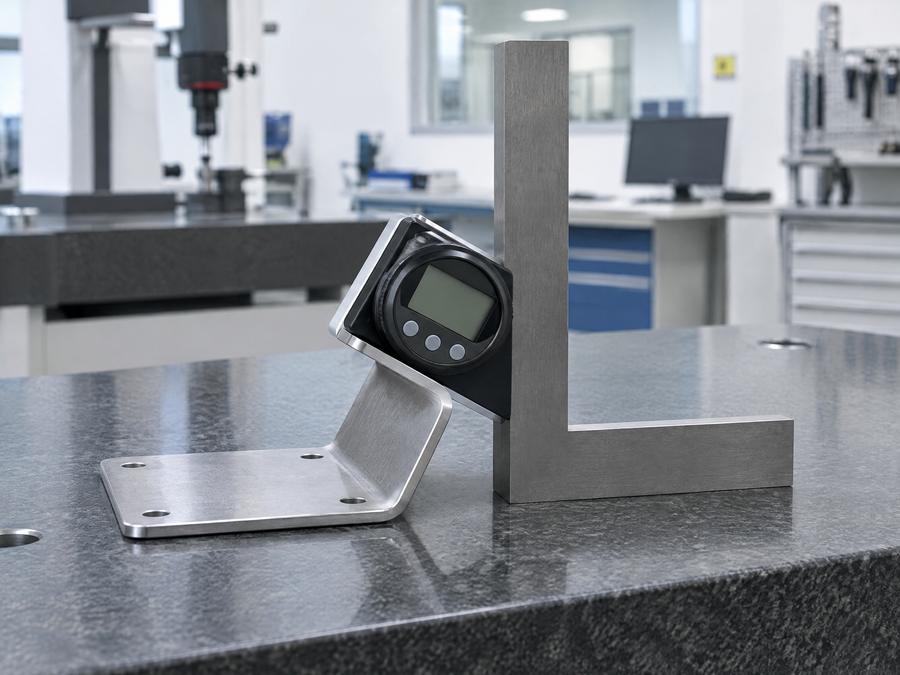
| Inspection | Measurement report to drawing, first article inspection report (FAIR / EMPB) on request, coating thickness measurement, cross-cut test to DIN EN ISO 2409, 3.1 material certificate to EN 10204 |
| Lead time | First samples in approx. 3 weeks at best, usually longer – up to approx. 10 weeks depending on complexity; series production approx. 4–8 weeks depending on quantity and complexity (production time only), plus transport (sea freight approx. 30–45 days) |
| Data for your enquiry | Drawing (PDF) with tolerances, 3D model (STEP), for bent parts ideally the flat pattern (DXF), material, surface finish/RAL, annual volume and batch size |
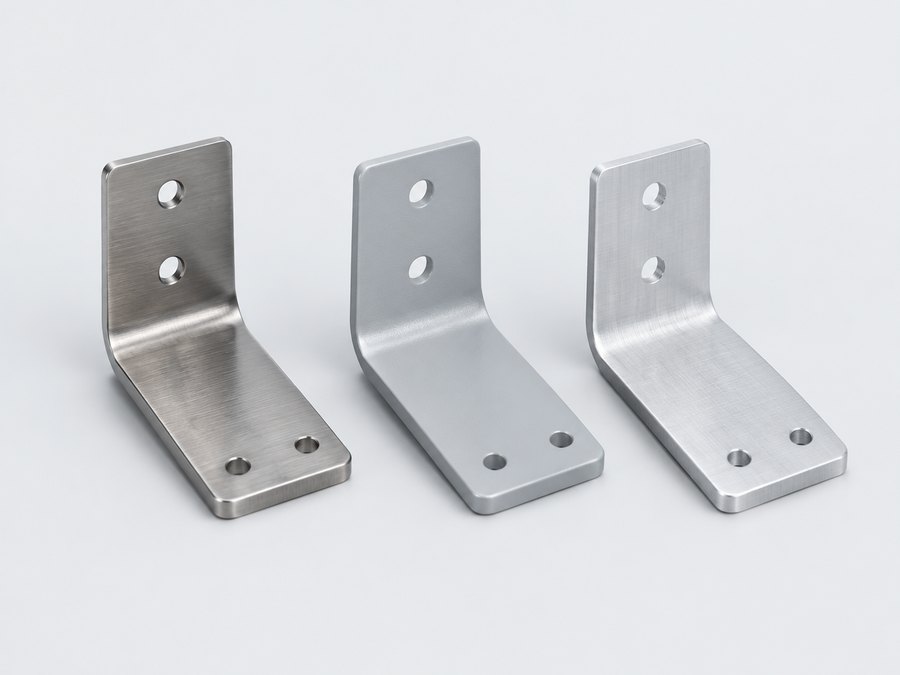
Stainless steel, steel or aluminium sheet: materials for sheet metal parts
In China, materials are usually listed under their own designations. State the EN designation on the drawing and have the equivalent confirmed with a certificate.
| Material (EN) | Chinese equivalent | Properties | Typical application |
|---|---|---|---|
| DC01 / 1.0330 | SPCC | Easy to bend, not corrosion-resistant, must be coated | Brackets, covers, painted parts |
| DX51D+Z275 | SGCC (hot-dip galvanised), SECC (electrogalvanised) | Zinc layer from the mill, cut edges unprotected | Internal parts, carrier plates, mounting plates |
| S355MC | Q355 / QStE grades | Higher strength, larger bend radii required | Load-bearing consoles, vehicle construction |
| 1.4301 (X5CrNi18-10) | SUS304 / 06Cr19Ni10 | Corrosion-resistant, work-hardens during forming | Food, medical, outdoor use |
| 1.4404 (X2CrNiMo17-12-2) | SUS316L / 022Cr17Ni12Mo2 | Molybdenum, better resistance to chlorides | Coastal areas, cleaning chemicals |
| EN AW-5754 (AlMg3) | 5754 / 5052 (similar) | Easy to bend, seawater-resistant | Lightweight covers, vehicle parts |
Design guidelines for bent and laser-cut parts
These rules save costs and avoid queries – regardless of where the parts are made.
Choose bend radii to suit the material
Internal radius for DC01 about 1 × sheet thickness, for S355MC 1.5–2 × t, for aluminium 5754 about 1–1.5 × t. Smaller radii cause cracks on the outer fibre. For steel, DIN 6935 gives minimum values. Preferably release the radius as “tool radius permitted”.
Observe the minimum flange length
The flange must rest on the die. As a rule of thumb: at least 4 × sheet thickness plus internal radius. A 2 mm sheet therefore needs a flange of around 10 mm. Shorter flanges require special tools or rework.
Keep holes away from the bend
Place holes and cut-outs at least 2 × t + R from the bend line, otherwise they distort into slots. Where that is not possible, provide a relief cut or have the holes made after bending.
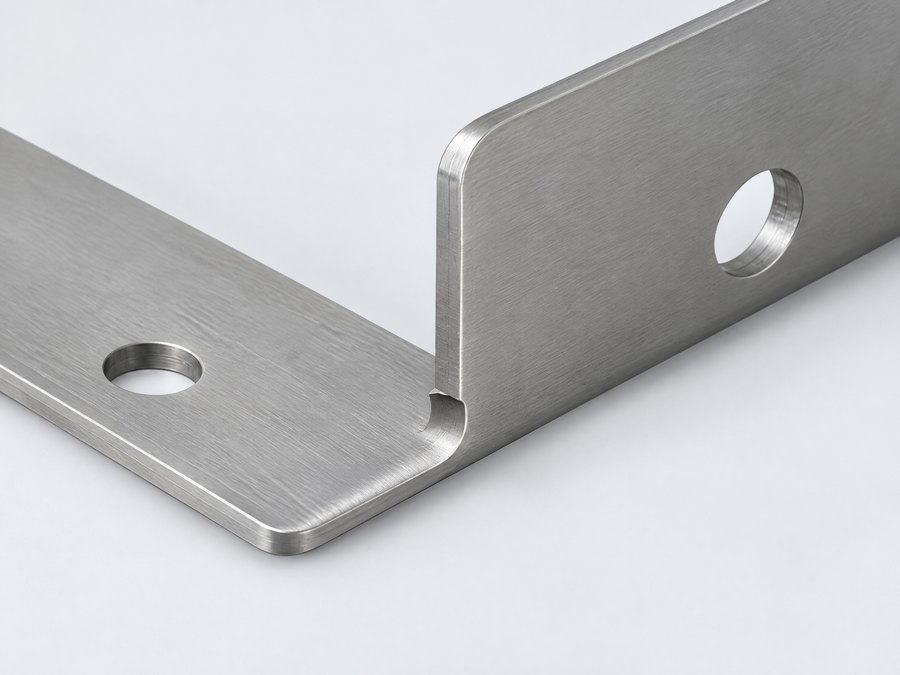
Plan bend reliefs
Where two bends meet at a corner, the part needs a relief cut (round or rectangular, width ≥ sheet thickness). Without it, the material tears or bulges.
Hole diameter ≥ sheet thickness
Smaller holes are possible with the laser, but with dross and a tapered wall. For threads, use extruded holes or press-in nuts (e.g. PEM type) instead of cutting threads in thin sheet.
Dimension from one side
Dimension bent parts from one datum edge and state whether inside or outside dimensions apply. Chain dimensions across several bends add up the tolerances – resulting in discussions at the first article inspection.
Specifying tolerances correctly to DIN ISO 2768 and DIN 6930
For sheet metal parts, the general tolerance DIN ISO 2768-1 m is sufficient in most cases. It allows, for example, ±0.2 mm for dimensions of 6–30 mm, ±0.3 mm for 30–120 mm and ±0.5 mm for 120–400 mm. Only set tighter tolerances where a function really needs them – every individual tolerance costs inspection effort.
For stamped steel parts there is a dedicated standard, DIN 6930-2, which reflects the particularities of cutting and bending better than the general 2768. What matters is that the drawing states clearly which standard applies. Without a callout, every factory applies its own in-house standard.
You will find more on sensible tolerancing in the guide Tolerances on the drawing.
What is hard to hold on sheet metal
- Flatness of large, thin surfaces after laser cutting or welding – guideline more like 0.5–1 mm per metre
- Angles over long bending lengths: the press brake often bends less in the middle than at the ends
- Dimensions across several bends: each bend adds ±0.2–0.3 mm
- Hole positions after powder coating: an 80 µm coating noticeably narrows holes
Typical defects in sheet metal parts – and how to avoid them
Welding distortion
Long welds on thin sheet pull the part out of shape. Remedy: define the tacking sequence and weld length, allow stitch welds instead of continuous welds where tightness does not require them, and provide for straightening after welding in the inspection plan.
Heat tint on stainless steel
Welded sheet parts in 1.4301 or 1.4404 lose their corrosion resistance at the heat tint. Pickling and passivation must therefore be stated as an operation on the drawing, otherwise the parts are only brushed.
Scratches on visible surfaces
Order stainless steel and aluminium sheet with protective film and mark the visible side on the drawing. Without this, no distinction is made as to which side the press brake leaves marks on.
Corrosion creep under powder coating
Without suitable pretreatment (zinc phosphating or nano-ceramic), the coating flakes off at the edges. Specify pretreatment, coating thickness and, where necessary, a salt spray test to DIN EN ISO 9227.
Wrong material
“Stainless steel” without a material number may well result in 201 instead of 304. State the material number, require a 3.1 material certificate and, if necessary, have a sample checked by X-ray fluorescence (XRF).
Sheet metal fabrication costs: what drives the price
For sheet metal parts, the price is made up of material, laser time, bending operations, welding minutes and surface finish. Every additional bend means another handling step at the press brake, and every re-clamping during welding costs time. For small parts, the coating often accounts for a third of the price.
Tooling costs are practically non-existent for laser-cut and bent parts. Exceptions are special tools for embossing, beads or extruded holes, as well as welding fixtures for larger assemblies.
- Use the same bend radii and sheet thicknesses across the whole part range – fewer tool changes
- Replace welds with tabs, clinching or riveting where strength allows
- Pre-galvanised sheet instead of galvanising afterwards, if unprotected cut edges are acceptable
- Standard RAL colours and textured finish instead of gloss: less scrap due to inclusions
- Group parts into families and request quotes together – this improves sheet utilisation
Process: from drawing to series sheet metal part
Review the drawing
We clarify bend radii, flat pattern, material equivalents and surface finish with the factory before quoting.
Quotation and factory selection
Quotations from factories that suit the part size and material – stainless steel parts are not given to a shop that only works with structural steel.
First samples with measurement report
Made with the series process, measured to drawing, including coating thickness and material certificate – you receive the first samples for inspection, with a first article inspection report on request.
Approval and inspection plan
After your approval, we define the features for series inspection – e.g. bend angles, hole pattern and coating.
Series and packaging
Edge protection, interlayers and films are specified so that the parts survive sea freight without scratches.
Is sheet metal fabrication in the Far East a good fit for your part?
A good fit if …
- Bent and welded parts with several operations
- Stainless steel sheet parts with grinding, pickling or passivation
- Recurring demand with predictable call-offs
- Sheet metal assemblies with press-in fasteners and coating
Less suitable if …
- Simple flat laser-cut parts in structural steel in small quantities
- Parts needed within a few days
- One-off parts and prototypes with no series prospect
Frequently asked questions about sheet metal parts
Do I need a flat pattern for bent parts?
Not necessarily – the factory creates it from the 3D model. Your own flat pattern (DXF) helps, however, if you have already produced with a specific bend allowance and the dimensions are to remain identical.
Which tolerance applies if nothing is stated on the drawing?
Then there is no clear specification. Enter at least DIN ISO 2768-1 m – or DIN 6930-2 for stamped steel parts – and tolerance functional dimensions individually.
Do holes stay within tolerance after powder coating?
No, the coating builds up on every side. Mark fitted holes and threads as “mask” on the drawing or allow for the coating thickness.
Can stainless steel sheet be supplied with a 240-grit finish?
Yes, as pre-ground sheet from the mill or ground afterwards. Specify the grain direction and visible side and have a limit sample approved.
Is laser cutting or stamping more cost-effective?
Laser cutting pays off with variable geometry and medium quantities. From around several tens of thousands of parts per year with a simple contour, a stamping die usually pays for itself – we check this as part of your enquiry.
Are welded sheet metal parts also supplied with press-in nuts?
Yes, press-in nuts, studs and standoffs are usually inserted before coating. State the type and manufacturer, or an equivalent part, in the bill of materials.
Related part types
Enquiry: Sheet metal parts made to your drawing
Upload your drawing and 3D model, tell us the quantity and your deadline – we check feasibility and get back to you with questions or a quotation.
- Technical clarification before the request for quotation
- Quotations from audited partner factories
- One contact person in Germany
- Non-disclosure agreement (NDA) in advance on request
Prefer to call? 03641 9286337 · Mon–Fri 8 am–6 pm (CET)